


























PRO
By: Serenity Pittman
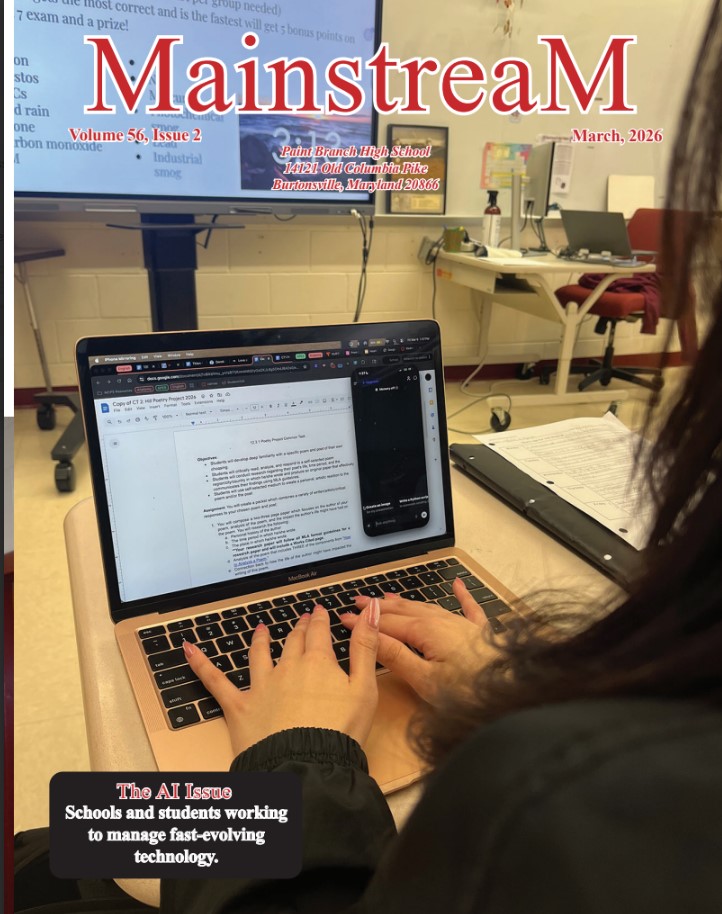
As we begin to normalize and adapt to AI being integrated into many aspects of our lives, one area in particular has become a concern: schools. People are concerned with academic honesty and how students may rely on AI instead of just using it for support, which will weaken their learning and overall academic performance. However, if used properly with implemented restrictions, AI can present benefits to teachers and students and become an aid in classrooms. This will introduce a new and improved way of teaching and learning.
As human beings, we can only obtain a certain amount of information. We have flaws, and we sometimes make mistakes. This is where AI would serve as a great resource for students and teachers. AI could provide quick, thorough, and accurate information for students that teachers may not be available to provide when students are looking for it. This will give students extra support and allow learning in the classroom to operate more smoothly.
AI can also be personalized for students in that it can adapt to a student’s learning style and assist them in an optimal manner. This type of personalization is something that teachers with over a hundred students do not have the time for. This would ultimately help students be more successful and comfortable with the way they learn, especially if it differs from how others learn. AI could offer students an opportunity to learn at their own pace and supply clarifying content to enhance understanding.
Another benefit of involving AI in classrooms is what it could provide teachers. AI could help teachers save time by assisting with grading, organizing lessons, and planning. This would allow teachers to primarily focus on teaching, including working one-to-one with students. For example, AI can automatically help to grade multiple-choice quizzes and tests, which frees up time for teachers to work on more important content. Also, AI could provide feedback on those quizzes or tests that tells teachers how their students are doing and what areas they understand or may be struggling with.
Touching back on the topic of student support, AI can be beneficial in situations where students and teachers face language barriers. According to Leslie Villegas and Jordan Abbott of New America,“ELs [English Learners] represent 10.6 percent of the total K–12 population” which signifies the need for more resources and tools for this large group of students and the teachers who work with them. For these students, tools such as text-to-speech and the AI multilingual voice tool, which helps convert text, speech, and images, can help them better understand content and allow them to communicate with teachers and peers more effectively.
As a society, we should learn to accept and embrace the future and take advantage of the benefits of these new technologies. If we consider changing our perspectives, we will begin to see how AI can benefit us in the chaotic aspects of our lives.
CON
By: Nardos Wondimu
U.S. Secretary of Education Linda McMahon once said that “artificial intelligence has the potential to revolutionize education.” Secretary McMahon, I have to ask: how can we prevent AI from deepening educational inequality and ensure students actually benefit from this “revolution”?
It’s alarming to see how many important figures are pushing for the integration of AI into K-12 school systems across the country. By rushing to embrace AI, the country will be simultaneously updating the classroom and dismantling the way human beings learn. I’m convinced that we’ll be trading children’s long-term cognitive health for short-term convenience that, in the end, will be damaging in a number of ways.
Learning is supposed to be difficult. That’s the point. The struggle of staring at a blank page or complex math problem pushes students to their limits and helps them grow as learners. This struggle prepares students for higher education, jobs, and life. When you hand someone a tool that can generate an essay or solve an equation within seconds, it’s removing the need to think at all. If students never navigate the frustration of being stuck, they never develop the grit required for high-level problem-solving or creative thinking.
Developing human relationships is part of education. Placing a highly-trained teacher in front of a classroom of young minds that aren’t completing assignments on their own or absorbing the lessons taught to them is pointless. Troy Wolverton of the San Francisco Examiner says many students already feel more disconnected from their teachers in AI-heavy environments. Wolverton reports on a survey conducted by the Center for Democracy and Technology that shows that half of all students reported that using AI in their classrooms has made them feel less connected with their teachers. Furthermore, among students whose schools are heavy adopters of the technology, 56% expressed that same sense of disconnection. Is this really the environment where today’s youth will develop their social and emotional intelligence?
One argument widely used to support AI in schools is that it will close the achievement gap, but the reality looks much grimmer. Lee V. Gaines from NPR writes that integrating AI into classrooms risks deepening existing systemic inequalities, creating a digital divide. Gaines cites a teacher survey from the Walton Family Foundation revealing that teachers in the 2024-2025 school year are largely self-teaching AI, with only 19% reporting official school policies. The research indicates significant disparities in AI training and access, favoring suburban and low-poverty districts.
It’s time to stop treating AI as inevitable and start seeing it as a choice. We need to preserve the friction of the traditional classroom. The deeply human process of learning cannot be sacrificed for an innovation that prioritizes efficiency. If we don’t start setting firm guardrails now, we may wake up in a decade where we’ve produced a generation of graduates who are experts at using tools, but have forgotten how to use their own minds.